EPC Best Practices
Kazakhstan C&I Rooftop Solar: 80.6 kWp Grid-Tied Project
How an 80.6 kWp C&I rooftop solar project in Atyrau, Kazakhstan is designed for -20 °C winters: 650 Wp N-type modules, two 36 kW inverters, 1.12 DC/AC ratio.
Kazakhstan is pushing renewable energy on a concrete timetable: the national programme targets roughly 10 GW of new wind and solar by 2028. Distributed grid-tied solar is a practical route into that build-out, because it can be approved for grid connection, participate in net metering or PPA arrangements where eligible, and benefit from import duty relief plus corporate income tax relief of up to ten years for qualifying projects.
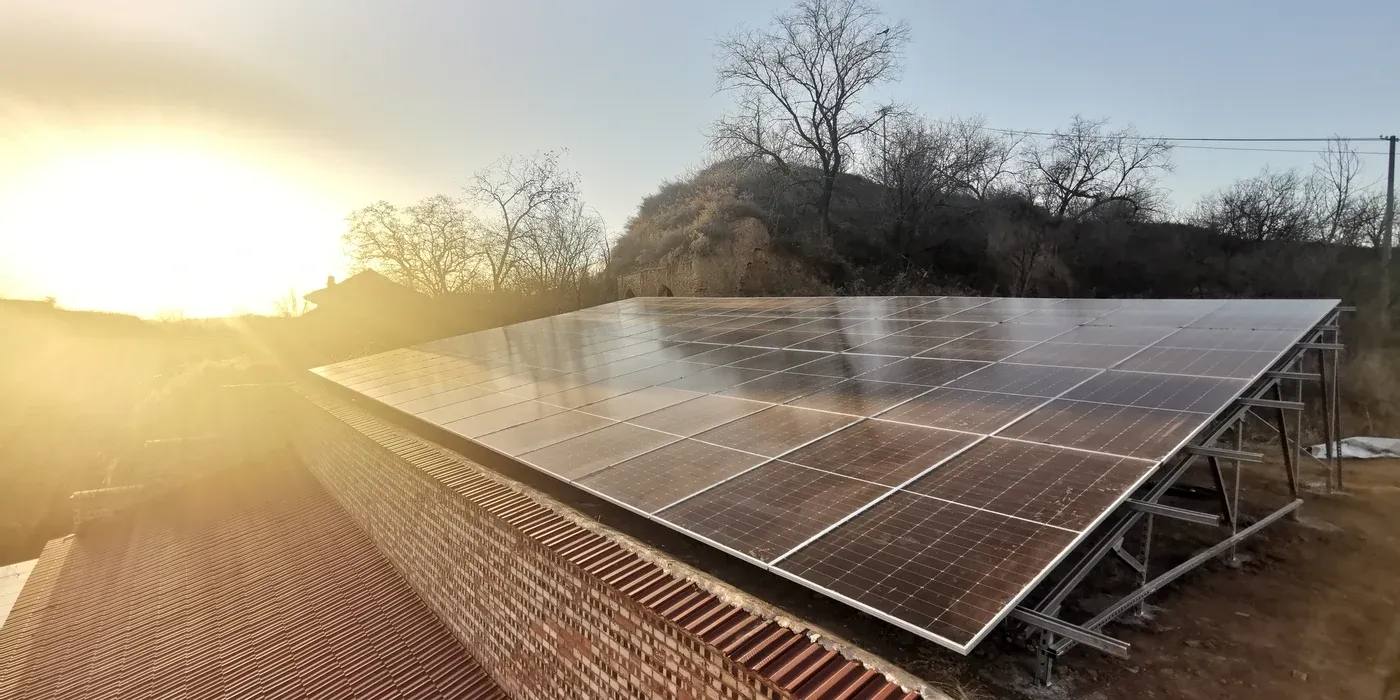
This article profiles a commercial and industrial (C&I) rooftop grid-tied project being prepared for a site in Atyrau Region, western Kazakhstan. It explains how a 650 Wp module, a 36 kW string inverter and the electrical system were matched to that site, and what to verify before building a similar grid-tied system.
Rooftop Solar Siting in Atyrau, Kazakhstan
The site sits in Atyrau Region. The climate is temperate continental: winter minimums reach about -20 °C, summers are hot with wide day-night swings, and both winter snow load and spring dust are part of the operating environment. None of that is a blocker, but each condition has to be designed for at the component selection and mounting stage.
Solar resource is moderate to good — annual irradiation of about 1,380 kWh/m² and 2,400-2,600 sunshine hours — enough to support healthy lifetime yield. The local low-voltage distribution network is reasonably developed and can absorb distributed PV at the 80 kW scale. Because the regional grid prioritises renewable generation, a grid-tied design without storage is the realistic and economic choice here.
System Overview of the 80.6 kWp Grid-Tied Plant
This is a pure grid-tied system with no battery storage. PV generation is converted to AC by string inverters and fed into the public low-voltage distribution network: output follows irradiance during the day and the plant idles at night.
Project Scale and Boundary Conditions
Parameter | Value | Note |
|---|---|---|
PV installed capacity | 80.6 kWp | Distributed grid-tied, no storage |
Module | 650 Wp monocrystalline | N-type bifacial double-glass |
Module count | 124 | 124 × 650 Wp = 80.6 kWp |
Inverter | 2 × 36 kW string inverters | 72 kW total AC; DC/AC ratio ≈ 1.12 |
System efficiency | ≈82% | Incl. module degradation, inverter and cable losses, soiling |
Operating life | 25 years | First-year degradation ≤2%, then 0.5-0.8% per year |
Grid connection | Low-voltage | Full or surplus export, subject to local net metering rules |
Footprint | About 1,150-1,200 m² | Yard area; a rooftop build needs no additional land |
Chosen for the Climate: the 650 Wp N-Type Module
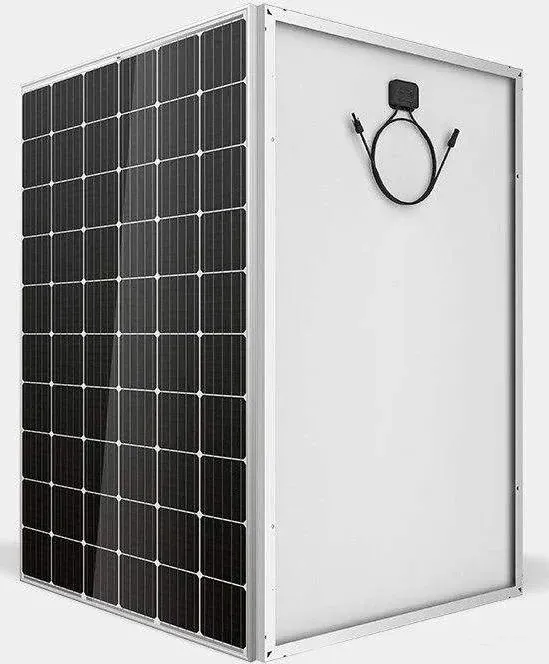
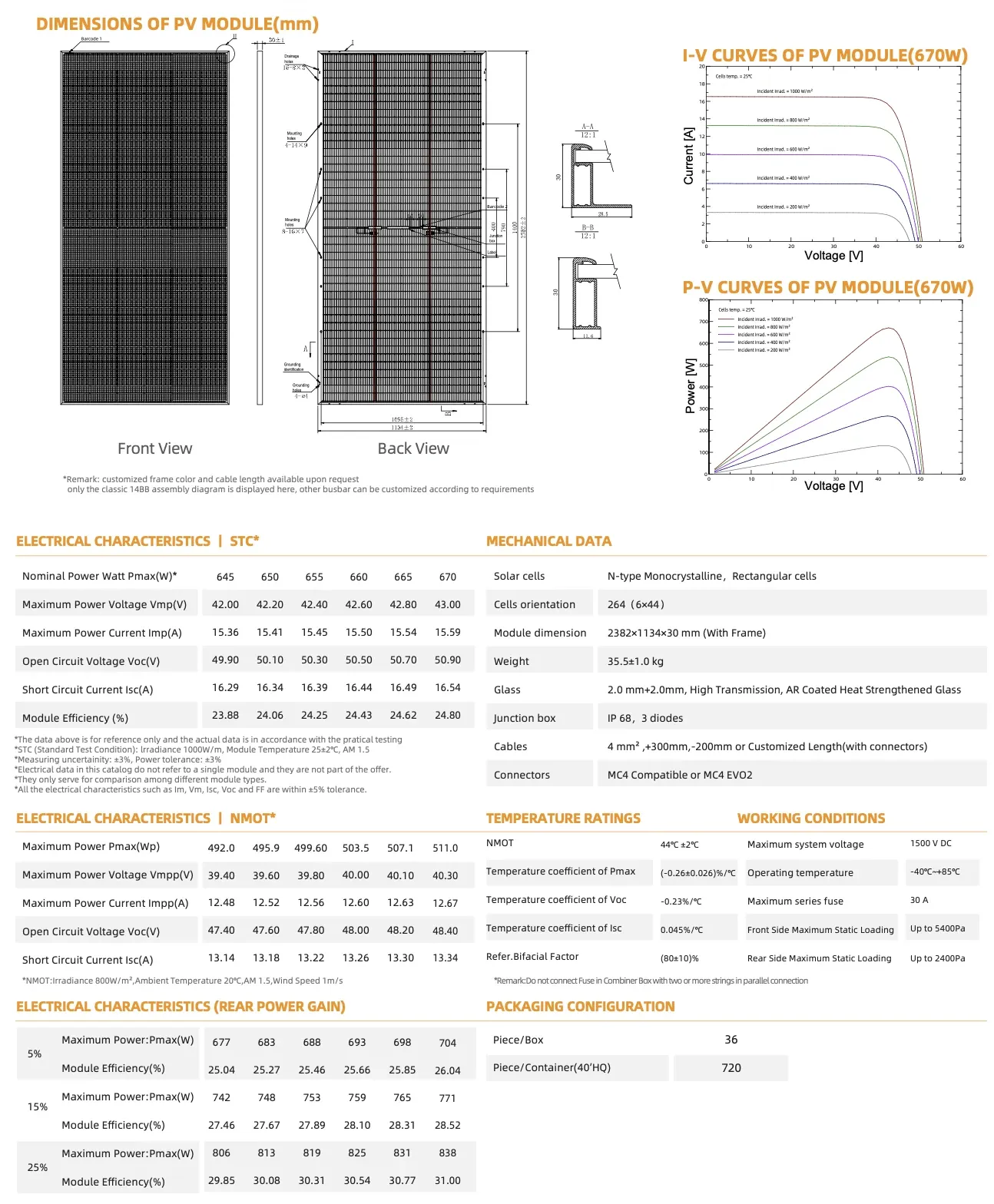
The module selected is a 650 Wp N-type bifacial double-glass monocrystalline unit. Its double-glass, tempered construction and lower temperature coefficient suit a climate with cold winters and dusty springs: its -40 °C to +85 °C operating range sits well beyond the region's typical -20 °C winter low, and high-transmittance tempered glass resists snow load and dust abrasion better than conventional single-glass modules. At the 650 Wp power class, module efficiency is about 24%, keeping the array compact within the available footprint. Its specification is shown in Figure 2.
Two 36 kW String Inverters Keep the DC/AC Ratio in the Safe Range
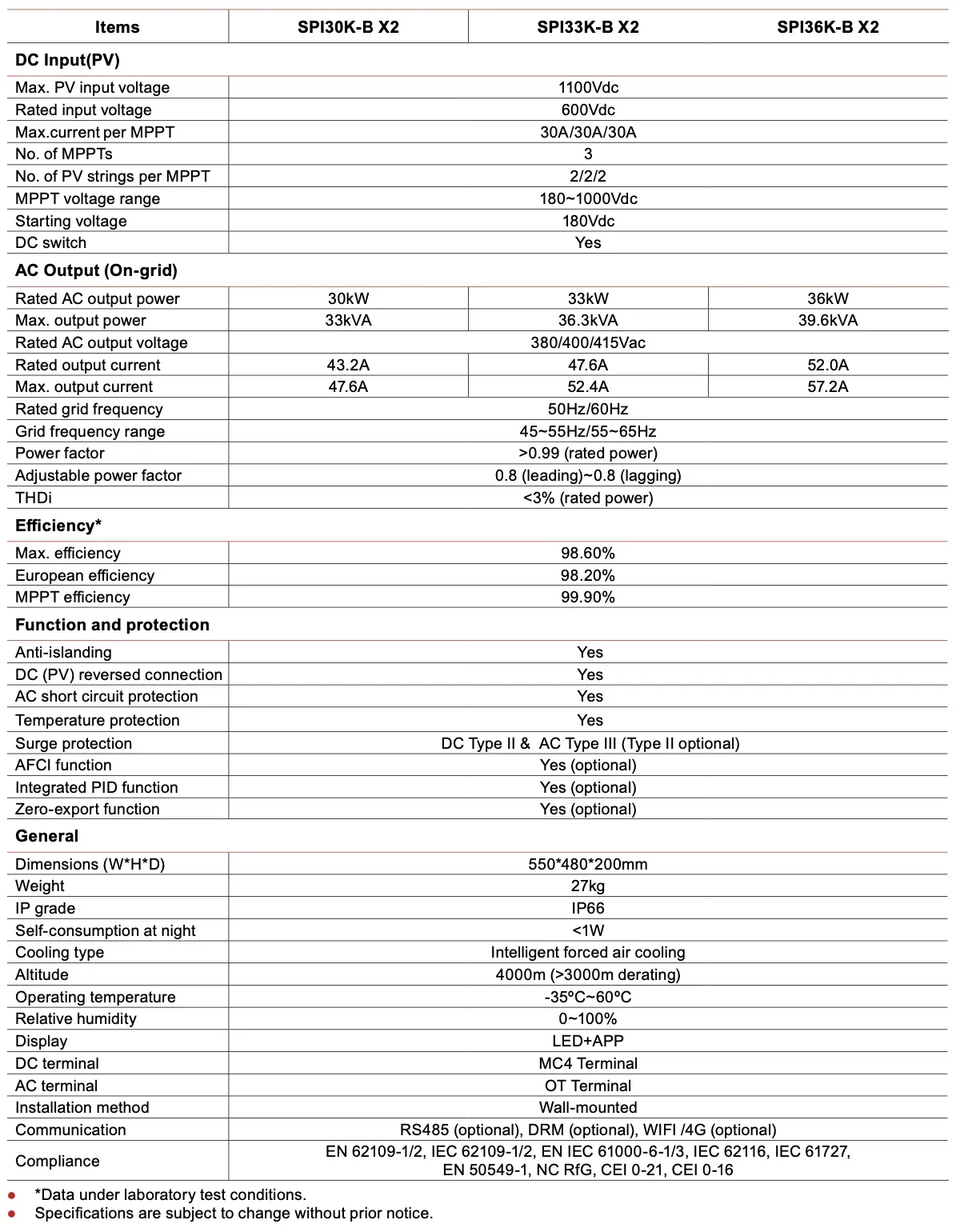
Generation is converted by two 36 kW three-phase string inverters — 72 kW of AC capacity in total. Against 80.6 kWp of modules that is a DC/AC ratio of about 1.12, inside the conventional safe range for string inverters. This matters, because an over-raised DC/AC ratio keeps inverters in an over-capacity, high-temperature state for long periods — exactly the condition that accelerates power-device ageing and raises fire risk on commercial rooftops.
In this configuration the inverters run matched to the array with no long-term overload, and multiple MPPTs let each string optimise independently, so a shaded or snow-covered string does not drag down the whole array. The 36 kW inverter specification is shown in Figure 3.
Bill of Materials for the 80.6 kWp System
Every component was selected before work started — modules, inverters, monitoring, mounting, cable and connectors — so the system is procured as one matched set rather than assembled from whatever was cheapest at the time.
No. | Item | Model | Qty | Unit | Note |
|---|---|---|---|---|---|
1 | PV module | 650 Wp mono | 124 | pcs | 650 Wp N-type bifacial double-glass |
2 | Grid-tied inverter | SPI36K-B X2 (EU version) | 2 | units | |
3 | Inverter monitoring | WiFi logger | 2 | units | |
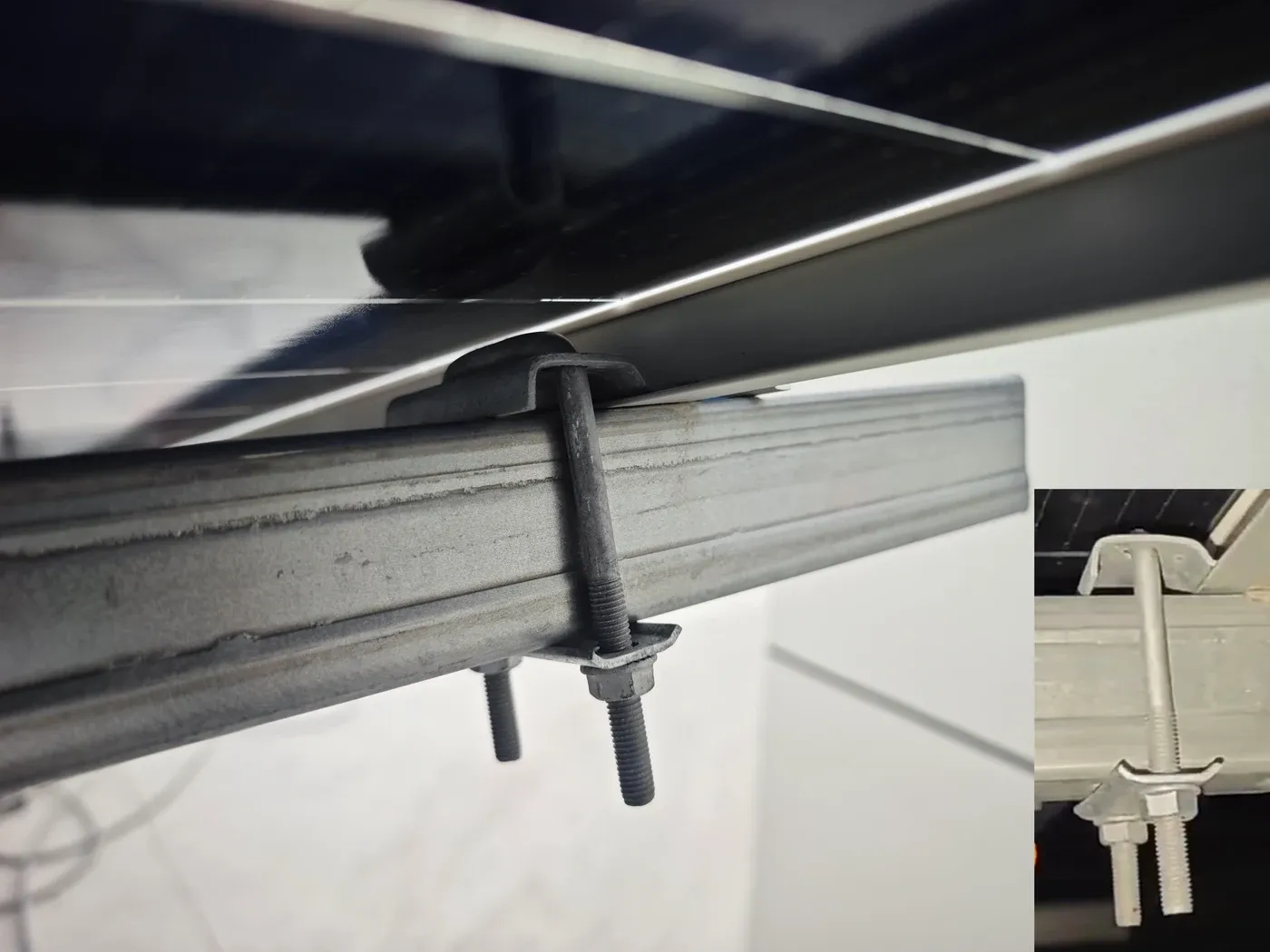
4 | Mounting | Hot-dip galvanised steel rooftop structure | 1 | set | TBC |
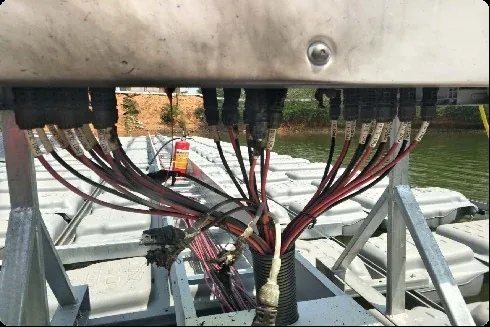
5 | DC cable | PV1-f 4 mm² | 800 | m | TBC |
6 | Connectors | YT18-01 | 10 | sets | |
7 | Packaging | | 1 | set | |
Grid Connection, Net Metering and Tax Incentives
Three policy levers make a distributed C&I plant viable in Kazakhstan, and each needs checking at the feasibility stage rather than after equipment arrives:
Grid connection approval. Distributed PV at the 80 kW class connects at low voltage where the local network can absorb it; the connection application should be filed against the actual site load, not a generic nameplate figure.
Net metering or PPA eligibility. Where the site can export surplus generation, net metering or a power purchase agreement turns excess daytime output into value instead of curtailment. Eligibility depends on local rules and should be confirmed before sizing the array.
Import duty relief and tax incentives. Imported renewable energy equipment can qualify for duty relief, and qualifying projects may access corporate income tax relief of up to ten years.
How the Plant Operates
During the day the string inverters follow solar irradiance and push AC power into the local distribution grid; at night, in heavy snow or under thick cloud, the plant idles. Following regional grid rules, when the network cannot absorb output the inverters accept dispatch and active-power-limit commands. Protection functions — anti-islanding, over/under-voltage and over/under-frequency — disconnect automatically on grid or equipment faults and reconnect once conditions are safe again.
How POP Energy Approaches This Project
For POP Energy, the module and inverter are only part of the job. A plant that runs for 25 years comes out of design decisions: how the array fits the roof and the climate, how strings are laid out, how the DC/AC ratio is held in the safe range, and how each step is accepted before the next begins.
On this project the 650 Wp module and 36 kW string inverters were selected together against the actual Atyrau site conditions — not copied from a generic datasheet — and the electrical design was verified for load matching, temperature derating and protective device coordination before release.
Hardware parameters matter, but service carries more weight. Complete scheme design, equipment selection matching, standardized construction control, on-site technical guidance and staged acceptance are what turn drawings and datasheets into a plant that generates reliably and safely for its full design life.
Key Takeaways for C&I Solar in Kazakhstan
Design for the climate first. Select cold-rated modules and weather-resistant mounting for winter snow and spring dust, and calculate temperature derating against the site's summer temperature profile.
Keep the DC/AC ratio in the safe band. For string inverters stay at about 1.3 or below; this plant runs 80.6 kWp to 72 kW AC, about 1.12, retaining headroom without sacrificing yield.
Design for dispatch. Where curtailment risk exists, confirm the inverters support grid dispatch and power limiting, so the plant follows the grid instead of being switched off arbitrarily.
Use the policy incentives. Apply for grid connection approval and check eligibility for net metering or PPA, import duty relief, and corporate income tax relief of up to ten years.
Procure the plant as one matched system. A complete bill of materials from modules to cable avoids mismatched parts and ad-hoc changes on site.
Accept in stages. Verify electrical, mounting, protection and metering step by step before commissioning — that closes the gaps that shorten a plant's life.
Planning a C&I Solar Plant in Kazakhstan
If you are considering a grid-tied system for a commercial or industrial site in Kazakhstan, the decision should follow your site rather than a datasheet: how much shading and snow load there is, what the low-voltage network allows, and what the dispatch rules require. Send us your site conditions and load profile and we will check the module, inverter, string layout and DC/AC ratio against your actual situation — request a design review and we will come back with the configuration that fits your site.