Oct 31, 2026EPC Best Practices
Solar Cell Technology Evolution: Poly, PERC, TOPCon and BC
From multicrystalline BSF to PERC, n-type TOPCon and BC back-contact: what each generation changed, and why system design now beats cell efficiency.
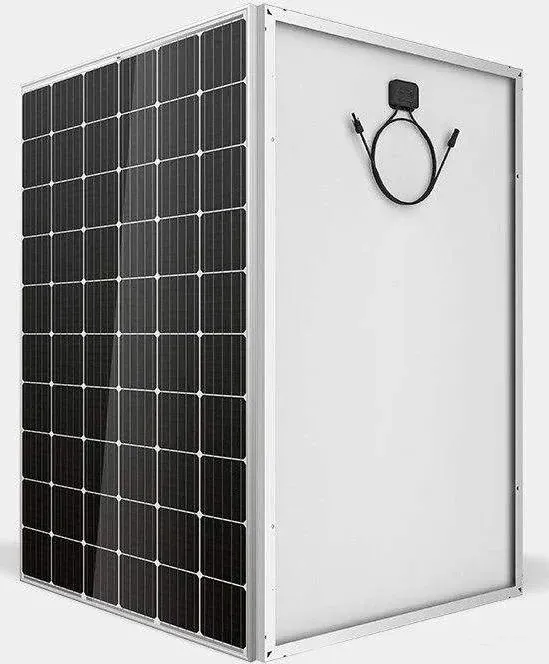
Looking back over more than twenty years of China's solar industry, the technical main line in solar modules has been a continuous pursuit of higher conversion efficiency and better adaptability to real installation conditions. Each round of cell technology has reshaped the industry, and each one has changed the way ground-mount plants, commercial rooftops and residential villa systems are actually built.
The Multicrystalline Era and the Aluminium BSF Cell
The first era of scale was dominated by multicrystalline cells using an aluminum back surface field (BSF). Before 2015, multicrystalline modules made up almost all of the mainstream market. Multicrystalline wafers cost less to produce, but the crystal contains many grain boundary defects, which puts a natural ceiling on conversion efficiency.
At that point LONGi committed to the monocrystalline route, betting on its long-term efficiency potential. When diamond-wire sawing arrived in 2015, monocrystalline manufacturing cost dropped sharply, monocrystalline quickly matched multicrystalline on cost-performance, and the monocrystalline route took off. LONGi grew into a new industry leader on the strength of that wafer and module strategy.
The PERC Golden Period (2016 to 2021)
Monocrystalline growth was followed by the golden period of PERC (Passivated Emitter and Rear Cell) technology from 2016 to 2021. A PERC cell adds a passivation layer on the rear side, which reduces carrier recombination and lifts conversion efficiency by more than one percentage point over a conventional aluminum BSF cell.
Driven by China's Top Runner program as a demonstration platform, PERC moved from the laboratory into mass production. Market share climbed quickly from 2018, new production lines were mostly PERC after 2019, and share peaked in 2021. PERC completed the replacement of older multicrystalline and standard monocrystalline cells and became the closing chapter of the p-type era, supporting the shift to grid parity in China.
The Shift to N-Type and the Origin of TOPCon
Once p-type PERC reached its efficiency ceiling, the industry turned to n-type routes. Few people know that the earliest development of n-type TOPCon technology in China started at Yingli. Yingli began n-type cell research as early as 2009 under the product name PANDA, the precursor of domestic TOPCon, and reached small-batch production in 2010. Our founding team came out of Yingli and took part in the early development of this generation of n-type technology.
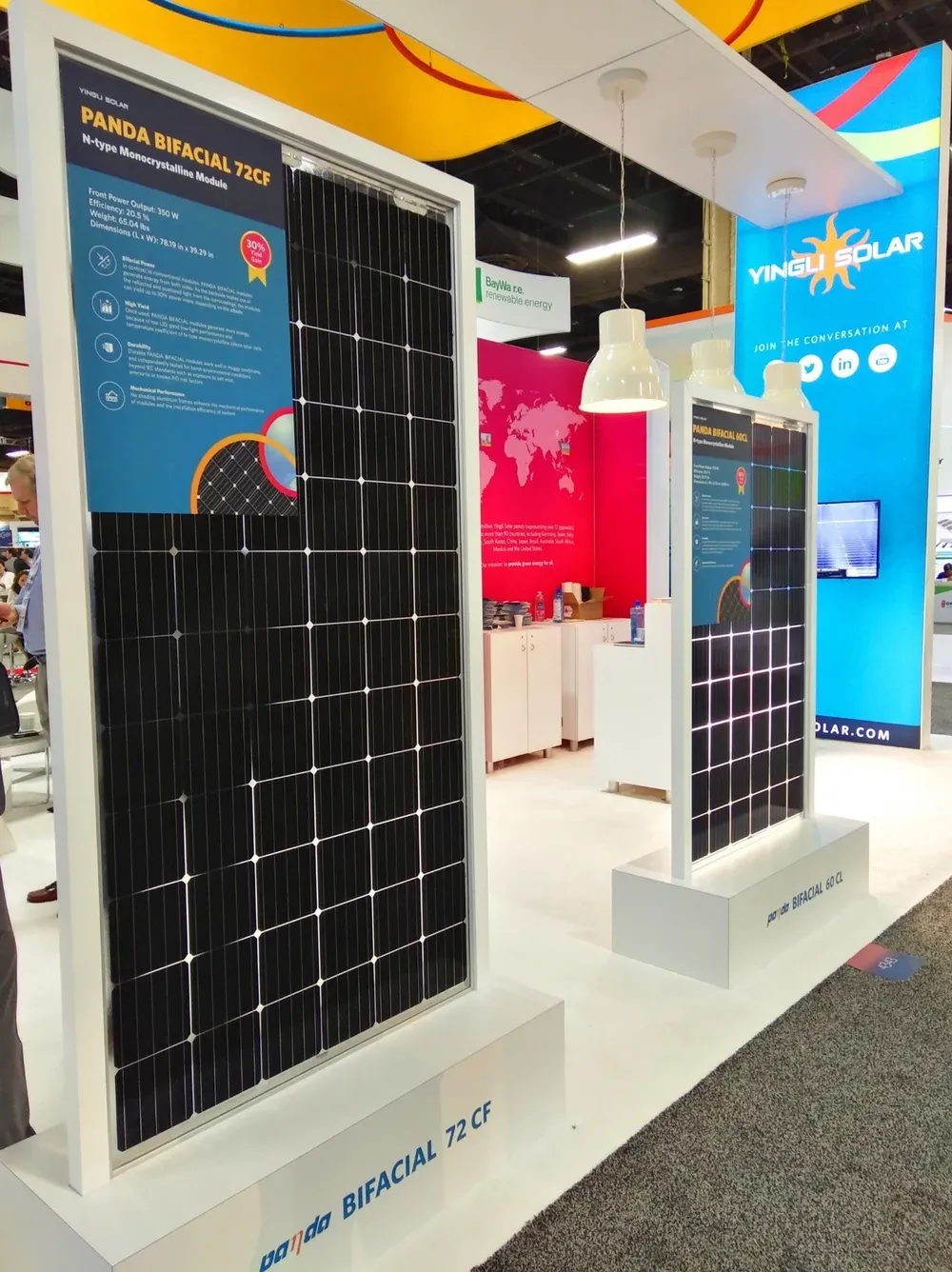
The PANDA name was taken from the national treasure, carrying the hope that domestically developed high-efficiency solar technology could break through overseas technical barriers. But Yingli's later balance-sheet pressure and corporate restructuring meant this early n-type work could not be pushed into the industry wave at the first opportunity.
Manufacturers such as JinkoSolar, JA Solar, LONGi and Trina then caught the industrialization window, completed large-scale TOPCon line expansion, and carried n-type TOPCon into the mainstream. Alongside TOPCon industrialization, the industry explored HJT heterojunction, MWT and shingled routes in parallel, each competing in laboratories and pilot lines, which broadened the n-type technology base.
BC Back-Contact and What It Actually Solves
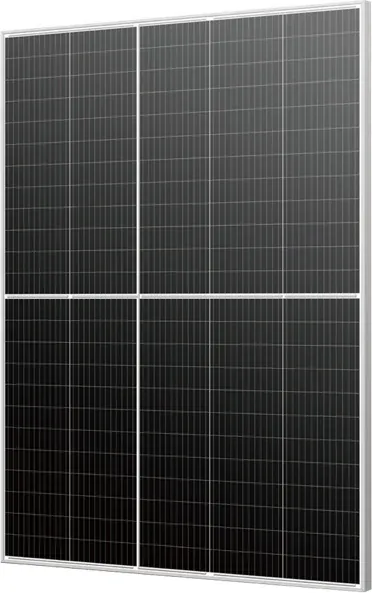
As TOPCon entered mass adoption, R&D focus moved to BC back-contact cells, a derivative and hybrid of HIT (HJT) technology. BC moves both the positive and negative grid lines to the rear of the cell, removing metal gridlines entirely from the front face. That eliminates the optical loss caused by gridline shading and pushes efficiency further: in 2025 to 2026, mass-produced BC modules crossed 26% and 27% conversion efficiency. Three-cut and four-cut slicing matured alongside, further improving current, reducing losses and releasing the maximum generating potential of each cell.
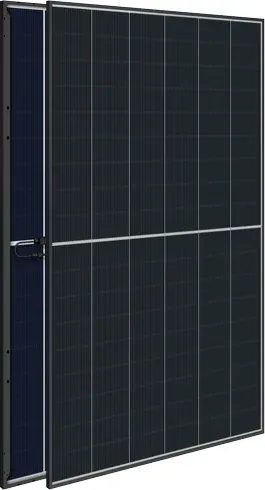
Efficiency figures from the laboratory alone do not explain what BC is actually worth in the field. Its main advantage is tolerance of shading and suppression of hot spots, which fits complex shaded installations such as commercial rooftops and residential villas.
Commercial factory roofs carry ventilation units, pipework and parapet shadows. Villa roofs are more complex still: chimneys, dormer windows, trees and antennas all create fragmentary, irregular partial shading.
With a conventional front-gridline TOPCon or PERC module, a shaded cell becomes a load. That readily produces a hot spot: generation falls off a cliff, and over time the module ages faster and safety risk rises.
With a BC cell the electrodes are all on the rear, so when leaves, branches or a chimney cast a small local shadow, the current path is not cut directly by front gridlines. Hot spot temperature falls markedly and the generation loss is far smaller than with a conventional module, which improves output stability and plant life in complex roof conditions. For villa projects, the gridline-free all-black appearance of a BC module also combines aesthetics with shading tolerance, which makes it the preferred option for high-end residential work.
Hardware Is Only One Part of the System
The industry now agrees on one point: comparing module power and cell efficiency alone is no longer what decides whether a project succeeds.
From multicrystalline through monocrystalline PERC, TOPCon and BC back-contact, module hardware capability has climbed continuously. But the module is only one link in the solar system. In commercially and residentially shaded installations in particular, system design, electrical topology, mounting structure selection, string matching, shading simulation and O&M planning jointly determine lifecycle generation and safety.
Even the best BC module cannot deliver its performance advantage if the upfront roof shading simulation is inadequate, the string design is unreasonable, or mounting detail control is missing during installation.
Module technology matters — but it is one component among several, like the brick chosen for a building
System design decides output — module, inverter, mounting, cabling and distribution box all have to work together
Shading simulation comes first — roof obstructions must be modeled before string and layout are fixed
Service outweighs spec sheets — design, technical support, acceptance and after-sales carry more weight than parameters
How POP Energy Approaches Module Selection
In POP Energy's view, the cell technology route and module selection matter, but a module is like the brick chosen for a building: only one part of the system. The healthy operation of a solar plant depends on how the whole system works together, where module, inverter, mounting, cabling and distribution are all indispensable. Compared with hardware parameters, the value weight of system design, technical service, project acceptance and after-sales support is higher.
We combine an understanding of the full cell technology chain with customized design against actual roof conditions, matching complete solutions to shading, load and electrical environment so each device performs to its capability and hardware advantage turns into long-term stable, reliable and controllable plant revenue.
Planning a Solar Installation
If you are choosing between PERC, TOPCon and BC for a specific site, the decision should follow the roof rather than the datasheet: how much shading there is, what the load allows, and what the electrical environment looks like. Request a module and system design review and we will match the cell technology, string layout and mounting solution to your actual roof conditions.