EPC Best Practices
Villa Solar Design: 8.64 kWp PV + Storage, 89.4% Self-Sufficiency
System design for a Bucharest villa: 18 x 480 Wp modules, a 10 kW hybrid inverter at 86.4% sizing, LFP storage, and PV*SOL results at 89.4% self-sufficiency.
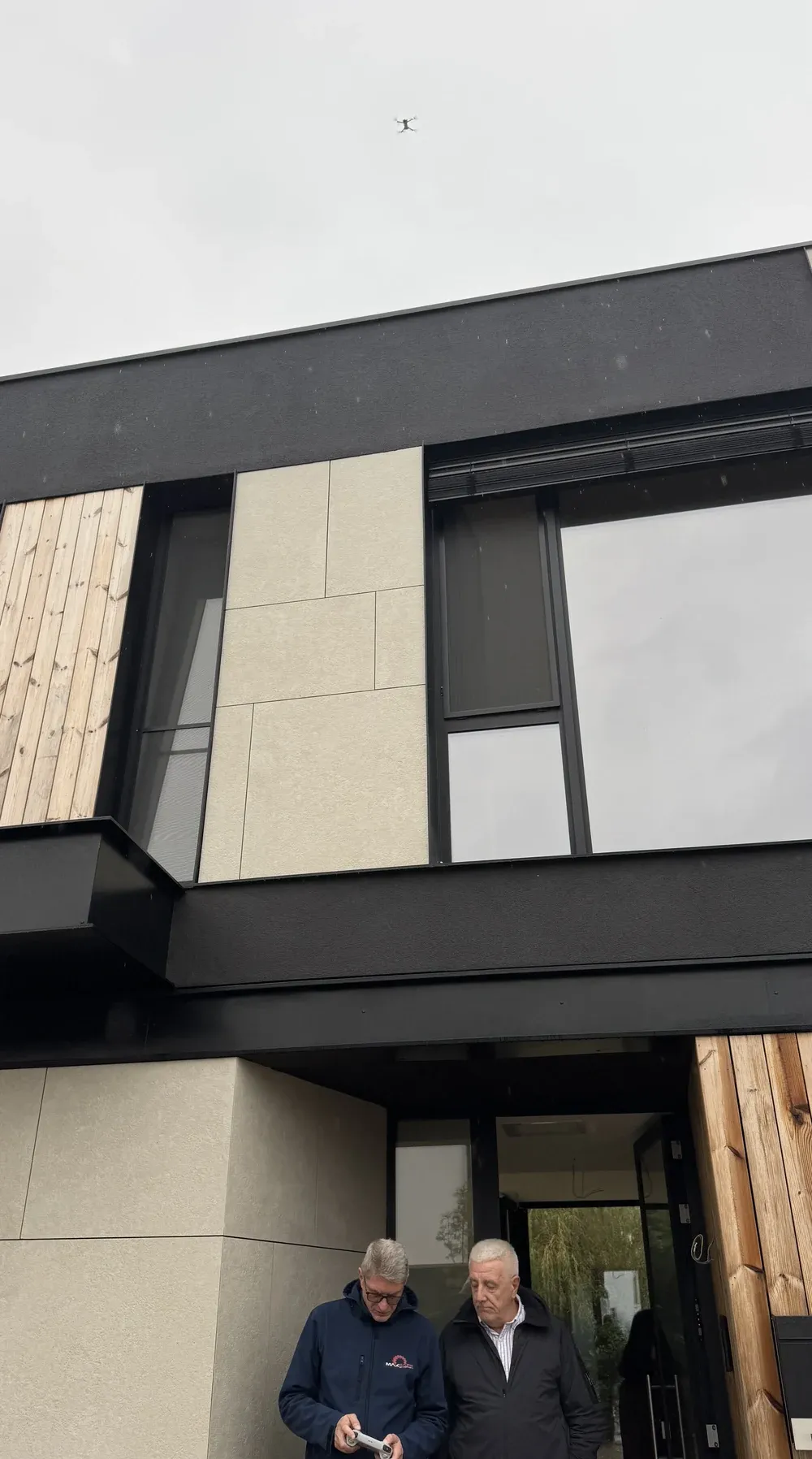
In Part 1 we inspected the site and defined the goal: let daytime solar carry the evening load. Part 2 is where that goal becomes a working design against a real Bucharest-area household.
The design covers an 8.64 kWp array of 18 AIKO modules across two south-facing roofs, a 10 kW hybrid inverter and LFP battery storage, modelled in PV*SOL premium against local climate data. The simulated result is 89.4% self-sufficiency — the share of the household's annual consumption the PV-plus-battery system covers itself.
By the end you should be able to judge how array size, string layout, inverter rating and battery capacity translate into self-sufficiency and annual yield, and what to verify if you commission a similar system. The construction report follows in Part 3.
From Site Inspection to System Design
Part 1 recorded the site visit: the roof, its orientation and the load the system has to carry. That inspection established the usable roof area and the household's consumption profile.
This article sets out the engineering that follows — the module array, the inverter, the storage and the expected energy flows, modelled in PV*SOL premium against Bucharest climate data (Meteonorm 8.2, 2001-2020).
Design Inputs: Site, Climate and Household Load
The villa sits just north of Bucharest, in a temperate continental climate with roughly 1,300 kWh/m² of annual irradiation (about 3.8 kWh/m² per day) and a strong seasonal swing between short overcast winter days and long summer days.
It connects to the Bucharest-area low-voltage (LV) distribution network, so grid connection follows EU requirements for Type-B distributed generators (EN 50549-1).
The load the system is designed to serve is a two-adult, two-child household drawing about 4,308 kWh a year with a 10 kW load peak — and it is the peak, not the total, that the storage is sized against.
System Overview: 8.64 kWp Hybrid PV + Storage
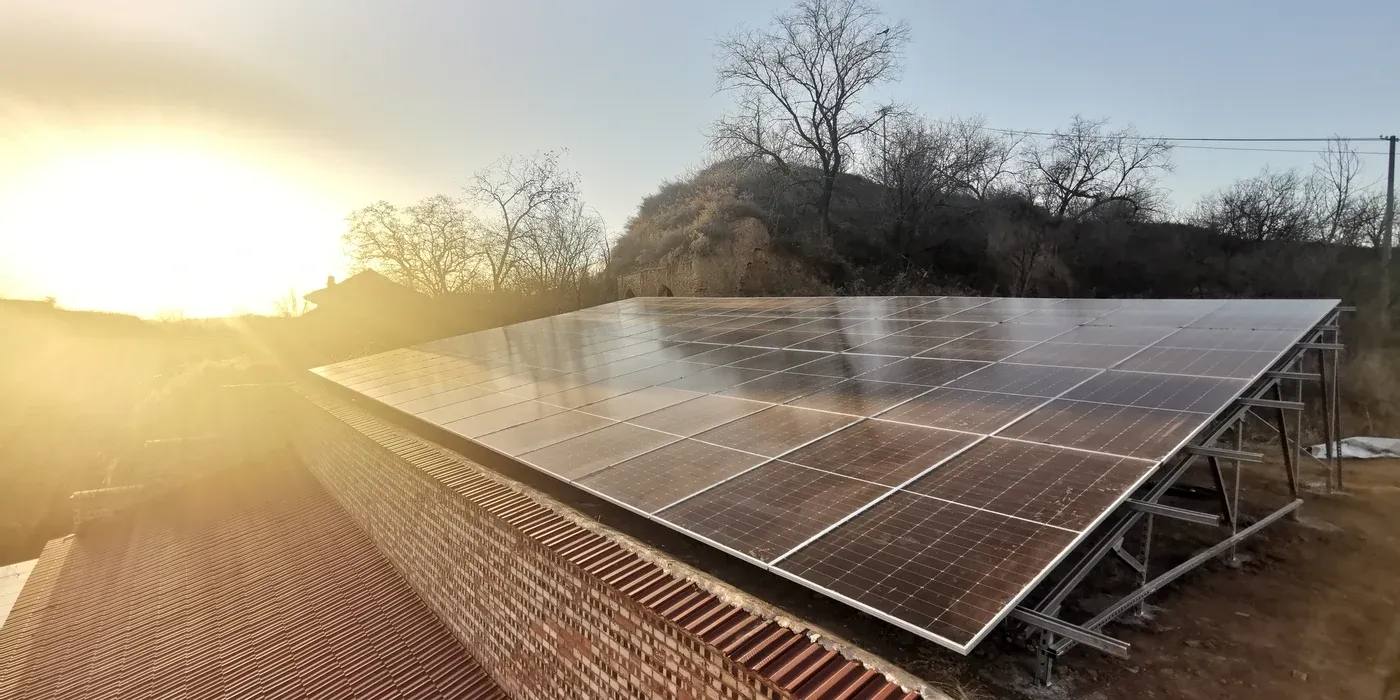
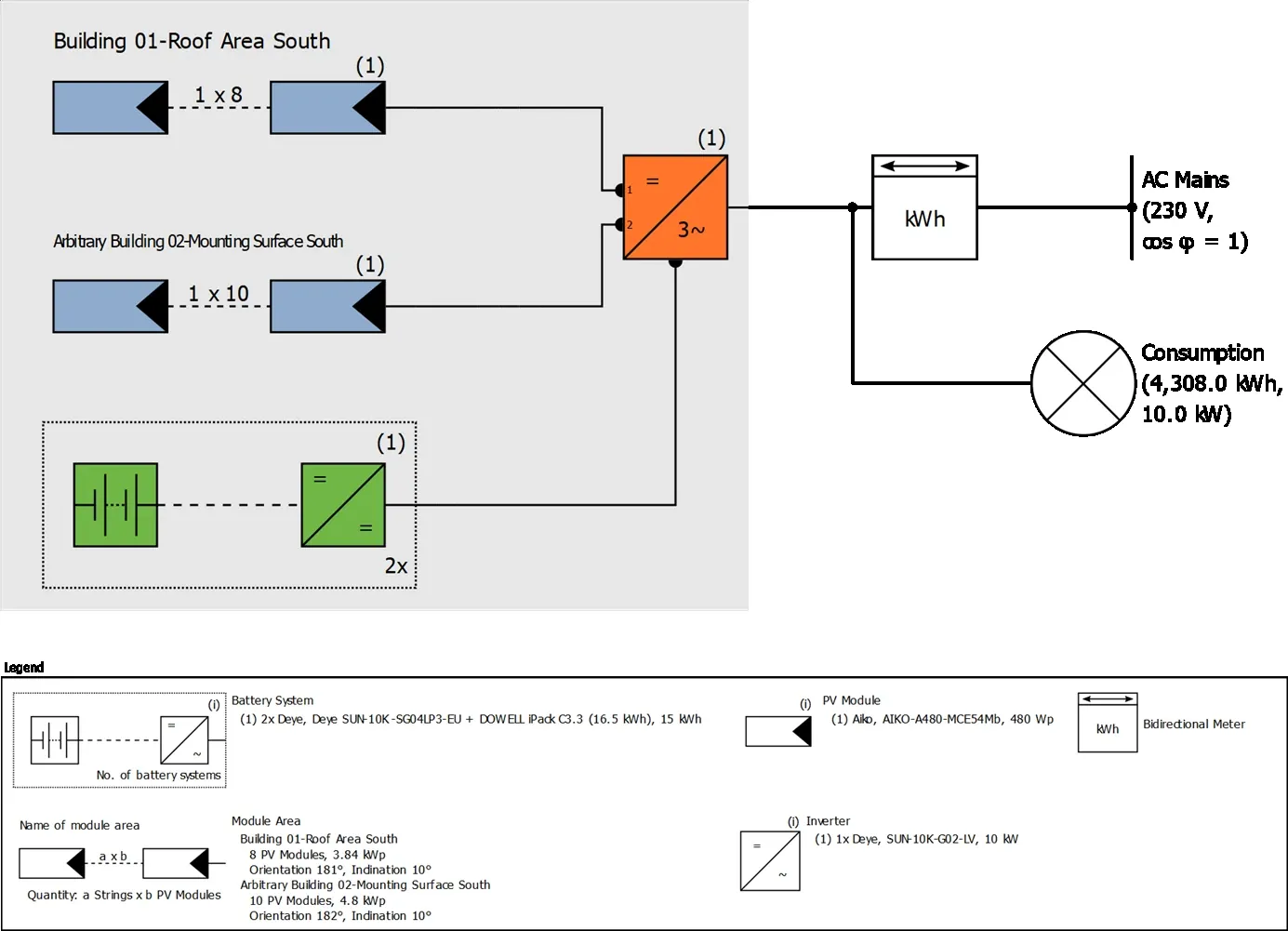
The design pairs an 8.64 kWp array with a single 10 kW hybrid inverter and two LFP battery systems. Generation, storage and grid exchange are managed by one hybrid inverter, with the array split across two south-facing roof areas and connected in two strings.
System Design Summary
Parameter | Value | Remark |
|---|---|---|
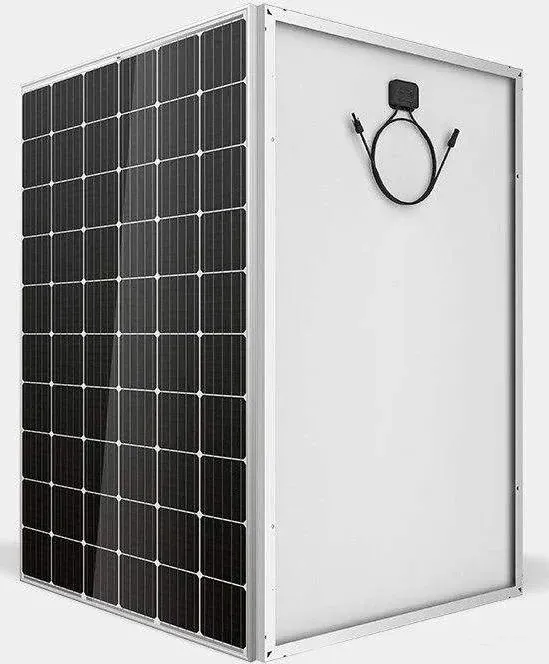
PV generator | 8.64 kWp | 18 × 480 Wp AIKO modules |
PV surface | 36.0 m² | Two south-facing roof areas |
Inverter | 10 kW hybrid (Deye SUN-10K-G02-LV) | 3-phase, sizing factor 86.4% |
Battery | 2 × LFP system | Deye SUN-10K-SG04LP3-EU + DOWELL iPack C3.3, DC-coupled |
Mains | 3-phase, 230 V phase-neutral | Displacement power factor cos φ ±1 |
Climate | Bucuresti 2001-2020 | Meteonorm 8.2 |
Grid | LV grid-tied | EU Type-B, EN 50549-1 |
Array Design: Two South-Facing Roofs, Two Strings
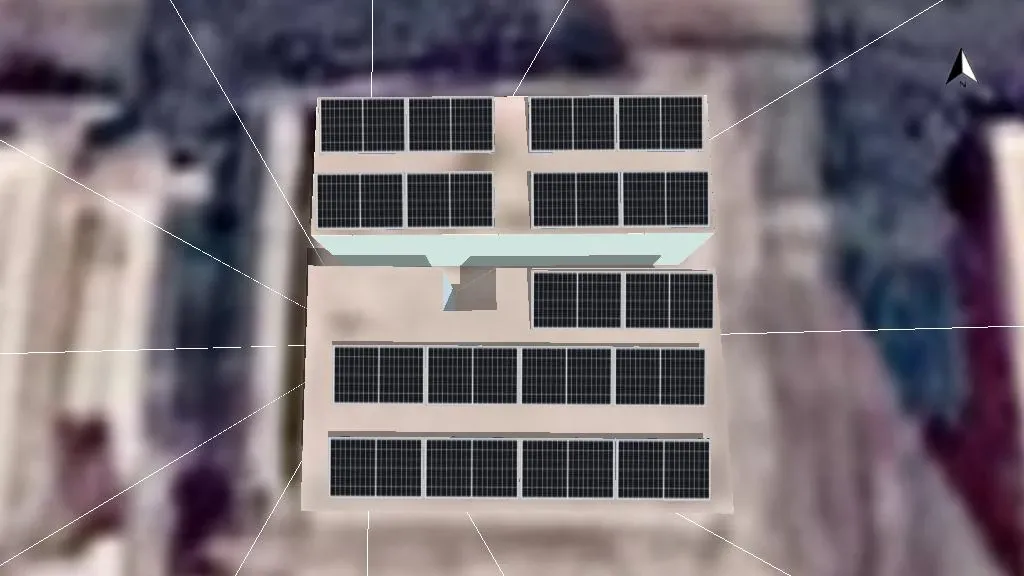
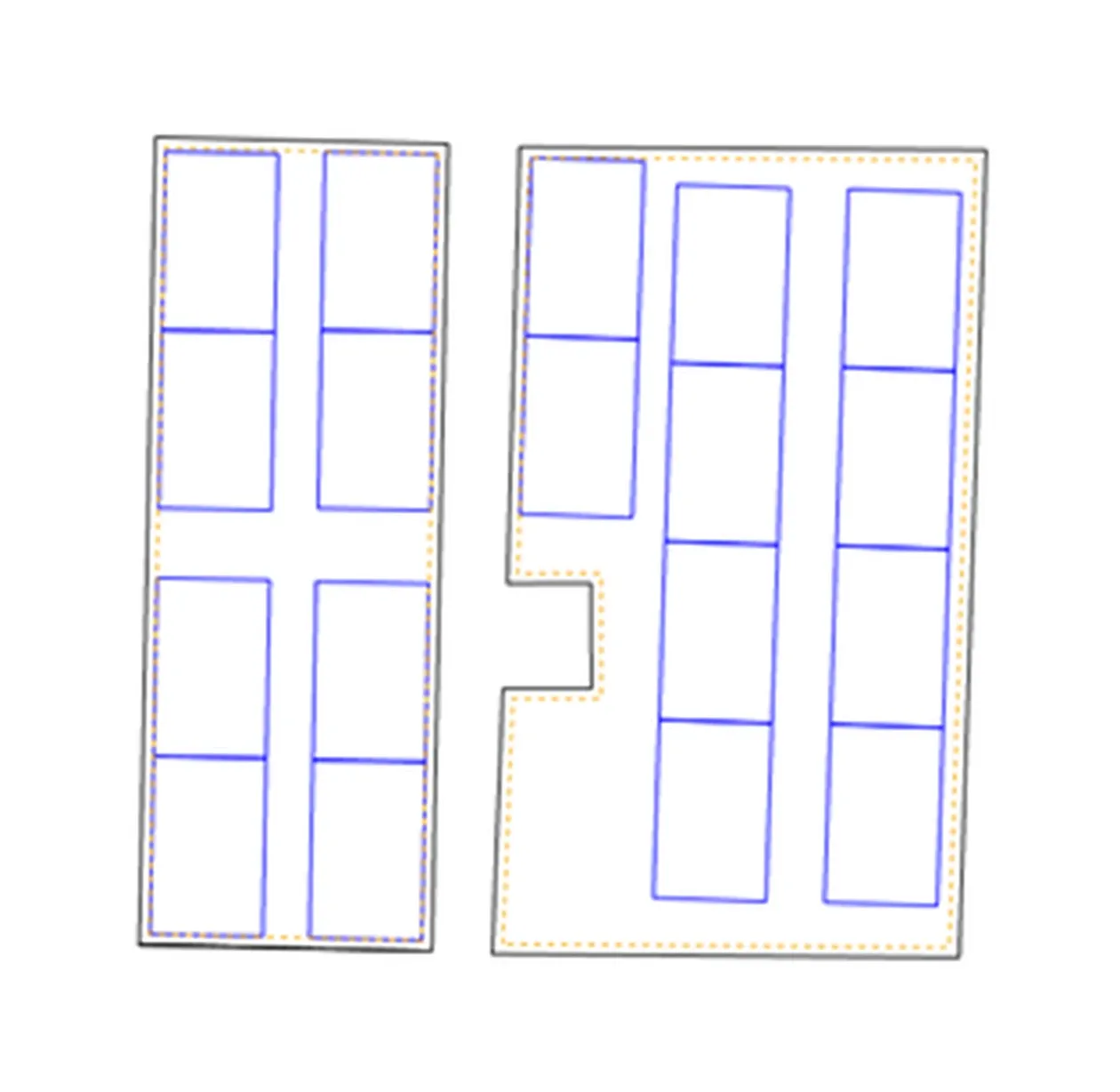
The array uses 18 × 480 Wp AIKO modules, split across the two usable south-facing areas:
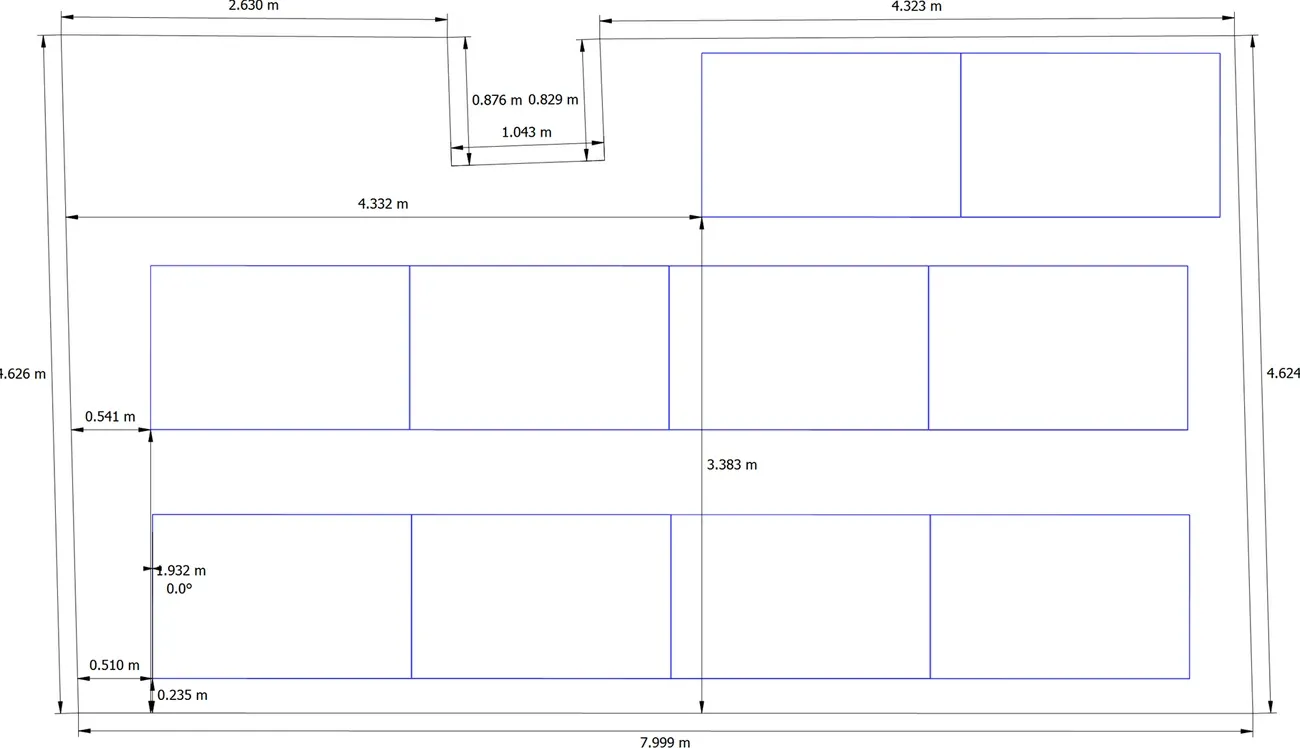
Roof area 1: 8 modules — 16.0 m², 3.84 kWp, 10° inclination facing 181°, roof-mounted
Roof area 2: 10 modules — 20.0 m², 4.80 kWp, 10° inclination facing 182°, roof-mounted
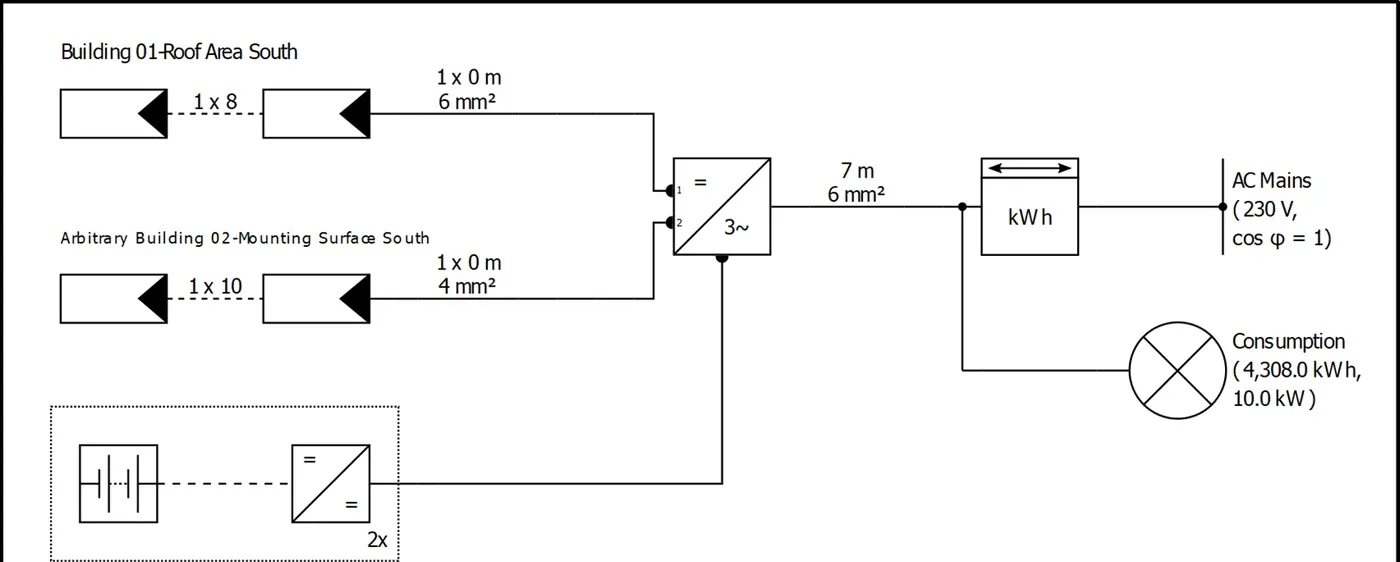
The two groups form two strings — MPP1 with one string of 8 modules, MPP2 with one string of 10. That keeps each string near its optimum voltage and lets the two MPPT inputs work independently under different shading.
Inverter Selection and Sizing Factor
The single point of conversion and energy management is the Deye SUN-10K-G02-LV hybrid inverter: 10 kW rated AC output on a 3-phase, 230 V mains, selected at an 86.4% sizing factor against the 8.64 kWp array.
A sizing factor below 1 is deliberate — it keeps the DC array inside the inverter's working range so the array is fully used without clipping, which is why the simulation records 0 kWh of clipping loss at the feed-in point. Its two MPPT inputs match the two strings.
For a distributed generator on an LV network, the inverter is selected for parallel connection under the EU Type-B regime (EN 50549-1) that applies to Romanian prosumer installations.
Battery and Storage Design: DC-Coupled LFP
Storage is carried by two LFP battery systems — Deye SUN-10K-SG04LP3-EU combined with DOWELL iPack C3.3 (16.5 kWh) units, DC-coupled to the inverter at a nominal 10 kW. DC coupling lets the battery charge directly from the array and discharge through the same inverter with a single conversion stage.
Two systems are specified so the stored solar comfortably covers the evening load. The simulation reports the battery discharging 2,684 kWh a year to consumption at a cycle load of about 3.6%, which supports a design service life above 20 years.
Energy Simulation Results: 89.4% Self-Sufficiency
The design was validated with a PV*SOL energy simulation against Bucharest climate data. Headline results are in the table below.
Result | Value | Remark |
|---|---|---|
Specific annual yield | 1,321 kWh/kWp | Per installed kWp |
Performance ratio (PR) | 88.49% | |
Yield loss from shading | 1.2% | |
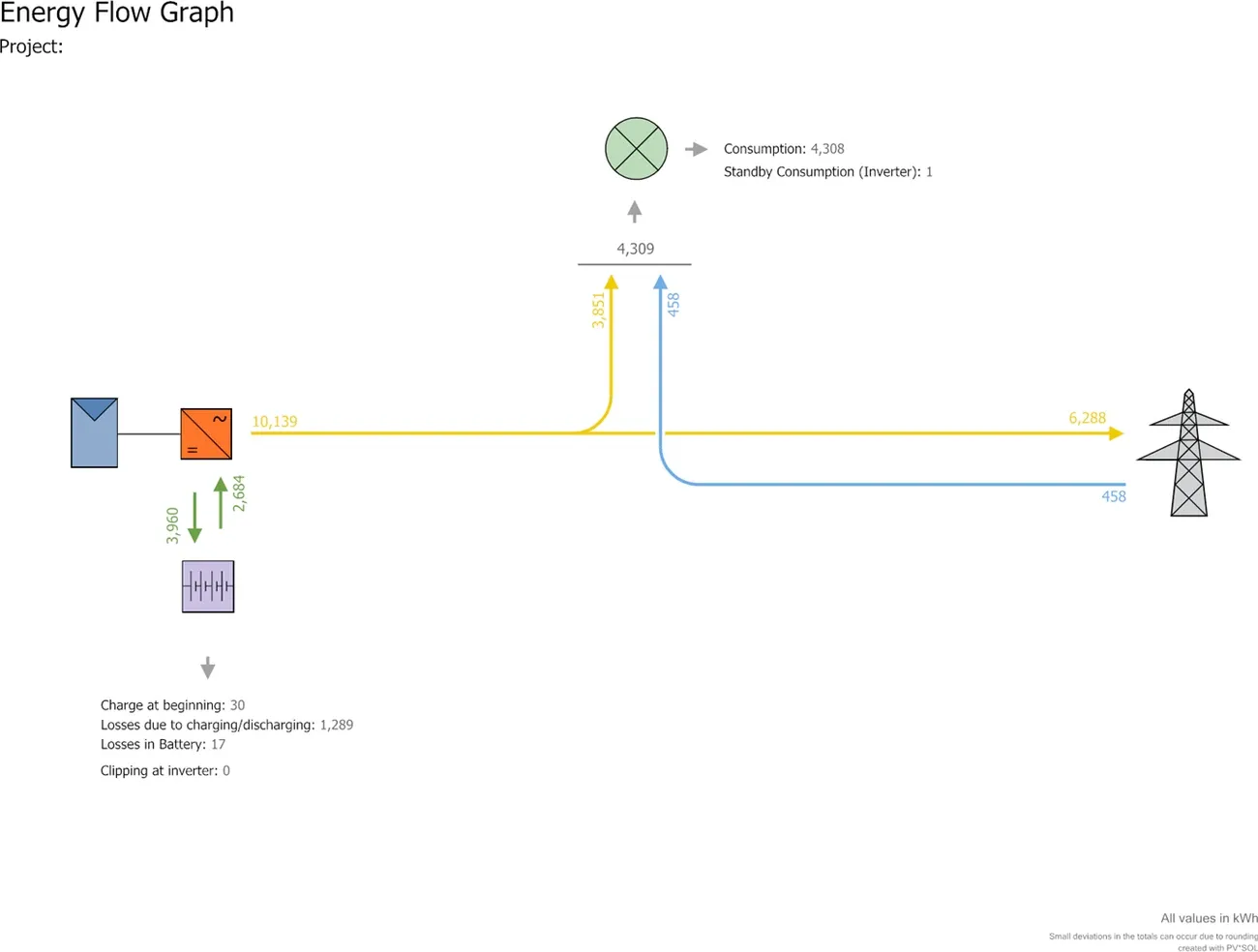
PV energy to AC grid + battery | 10,139 kWh/yr | |
Direct own use | 3,851 kWh/yr | Covered by PV with battery |
Grid export | 6,288 kWh/yr | |
Own power consumption | 38.0% | |
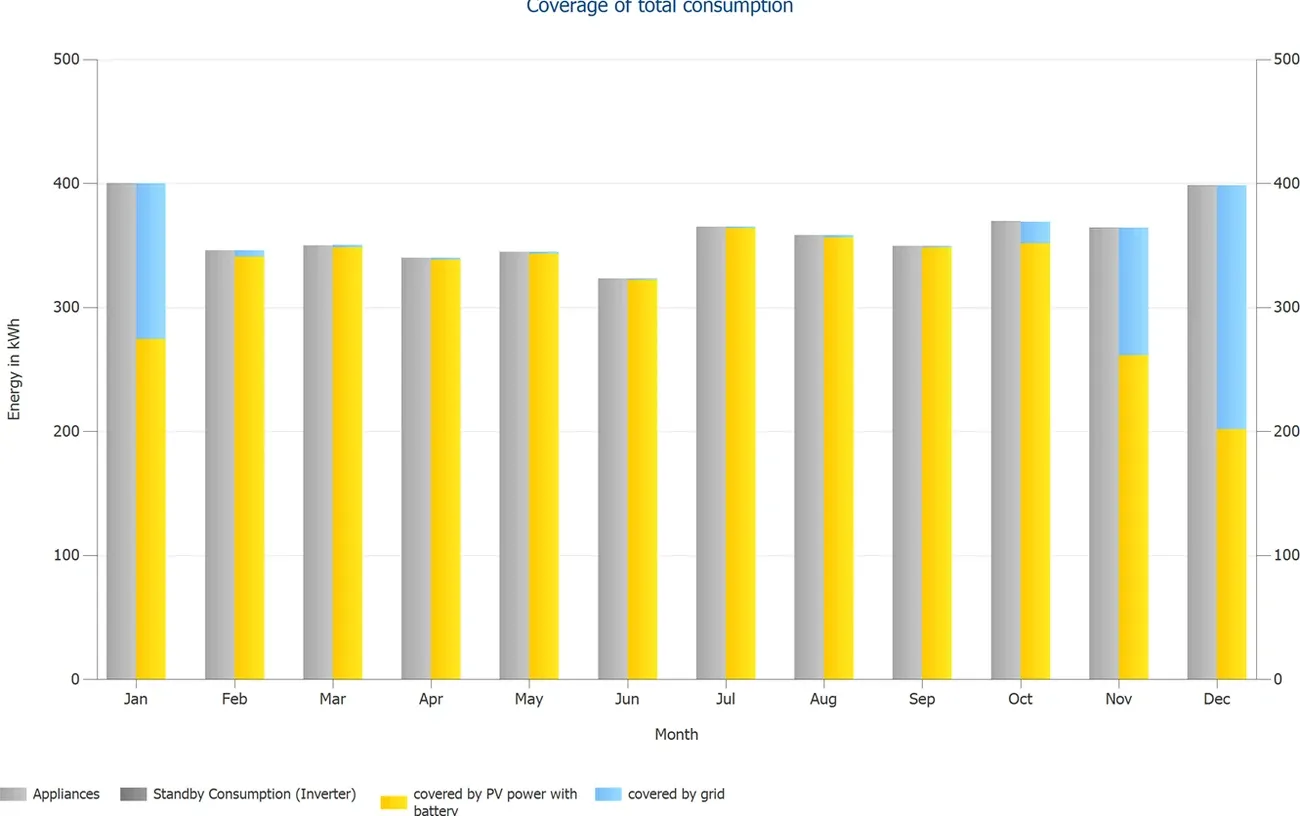
Self-sufficiency | 89.4% | Share of total consumption |
CO₂ avoided | 4,151 kg/yr | |
The two charts below show the annual energy flow and how the household's consumption is covered month by month.
Electrical Layout and Drawing Set
Beyond the equipment, the design fixes the electrical layout: the array is wired in two strings to the two MPPT inputs, the AC side is 3-phase with 6 mm² copper cable to the distribution point, and a bidirectional meter is fitted at the grid interface to register both import and export.
The three drawings below are the overview plan, the module-area dimensioning plan and the circuit diagram from the design set.
Grid Connection and EU Compliance
For a distributed generator on a low-voltage network, connection follows EU Type-B requirements under EN 50549-1. A bidirectional meter records both directions of energy flow, which is what enables the prosumer arrangement: own consumption first, surplus exported.
Connection terms — such as full or surplus export, and any net-metering arrangement — should be confirmed with the local distributor against the actual household load before construction.
How the Hybrid System Runs Day to Day
During the day the array powers the home first; once the house is covered, surplus solar charges the battery, and any remaining energy feeds the grid. In the evening, when household load peaks, the battery discharges to carry those loads — shifting daytime solar into the evening and trimming grid imports at peak time.
The design keeps the battery cycle load low (about 3.6%) so the storage is not cycled wastefully, which is why the simulation shows 0 kWh of battery-to-grid export and a self-sufficiency of 89.4%. This is peak shaving and load shifting built into daily operation.
How POP Energy Approaches This Design
For POP Energy, the equipment is only part of the delivery. A hybrid system that actually shifts the evening load is the product of design decisions: how the array is split and strung across the usable roof areas, how the inverter's sizing factor and the battery capacity are matched to the load peak, how the string layout and shading are checked before any panel is fixed, and how the yield and self-sufficiency are validated in simulation.
POP Energy's track record — supplying the PV-ESS systems for the 2022 FIFA World Cup and building the PV hybrid systems for the 2022 Beijing Winter Olympics — rests on doing exactly this for every project, from residential to utility scale.
Design matters, but service carries more of the weight. Complete scheme design, matched equipment selection, standardized installation control, on-site technical guidance and staged acceptance are what turn a design into a hybrid system that reliably powers the evening load over its full design life.
Key Takeaways for a PV + Storage Design
Split the array across usable roof areas and give each group its own MPPT. Two south roofs, two strings (MPP1 1×8, MPP2 1×10) keep each string near its optimum and isolate shading.
Keep the inverter sizing factor below 1. An 86.4% factor means the array sits inside the inverter's working range — no clipping, full use of the array.
Size the battery to the evening peak, not the whole day. Two DC-coupled LFP systems carry the load, and the low cycle load (about 3.6%) supports a design life above 20 years.
Validate with simulation, not guesses. PV*SOL against local climate gives a realistic yield (1,321 kWh/kWp), performance ratio (88.49%) and self-sufficiency (89.4%).
Connect per EU requirements. LV Type-B generators follow EN 50549-1; a bidirectional meter enables the prosumer arrangement.
Aim for high self-sufficiency with healthy battery cycling. 89.4% self-sufficiency and 0 kWh of battery-to-grid export mean the storage works for the home, not the tariff.
Frequently Asked Questions
Why are the modules split across two roof areas instead of one array?
Each area is sized to the available south-facing roof surface. Splitting lets the design use two separate areas (8 and 10 modules) while keeping each string near its optimum — and gives the two MPPT inputs independent control under different shading.
Why is the inverter sizing factor below 1 (86.4%)?
The 8.64 kWp array is matched to a 10 kW inverter so it sits inside the working range. That avoids clipping — the simulation records 0 kWh of clipping loss — and keeps the inverter from being undersized or overloaded.
How was the battery capacity chosen?
From the evening load, not from the array. The storage is DC-coupled and sized so the battery discharges 2,684 kWh a year to consumption at a low cycle load (about 3.6%), which keeps the design life above 20 years.
What will a system like this actually produce?
PV*SOL simulation for the Bucharest climate gives a specific yield of 1,321 kWh/kWp, a performance ratio of 88.49% and self-sufficiency of 89.4% — about 4,151 kg of CO₂ avoided a year. Actual results vary with weather, equipment and how the household uses energy.
What does grid connection require in Romania?
A distributed generator on the LV network follows EU Type-B requirements under EN 50549-1. A bidirectional meter registers both import and export; the prosumer arrangement uses own consumption first and exports the surplus.
Planning a PV + ESS System in the Bucharest Area
If you are considering a hybrid PV-plus-storage system for a villa in the Bucharest area, let the load curve drive the design. Send us your household load profile and site details; we will check the array layout, the inverter sizing factor, the storage capacity and the string arrangement against your actual situation, and return a configuration fitted to your site. Request a design review and we will come back with the configuration and the simulated yield for your roof.